
Sinus Infection (Sinusitis): Causes, Symptoms & Prevention Tips
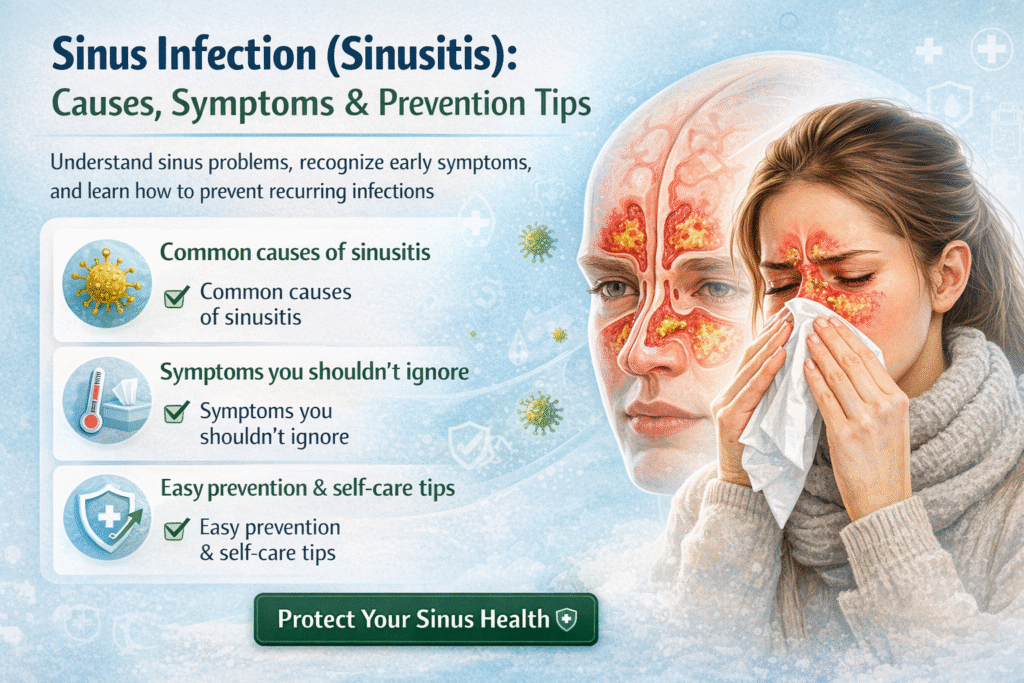
Sinus Infection (Sinusitis): Causes, Symptoms & Prevention Tips Sinus infections, medically known as sinusitis, affect millions of people worldwide each year. If you’ve ever experienced the throbbing facial pain, persistent nasal congestion, and overwhelming fatigue that accompanies a sinus infection, you know just how disruptive this condition can be to daily life. Understanding the causes, recognizing the symptoms, and knowing how to prevent sinusitis can help you manage this common but uncomfortable condition more effectively. What is Sinusitis? Sinusitis is an inflammation or swelling of the tissue lining the sinuses. Your sinuses are hollow cavities within the bones surrounding your nose, including your forehead, cheeks, and between your eyes. When healthy, these air-filled spaces are lined with a thin layer of mucus that traps dust, germs, and other particles from the air you breathe. Normally, mucus drains out of the sinuses and into the nose. However, when the sinuses become blocked and filled with fluid, bacteria, viruses, or fungi can grow and cause an infection. This blockage and inflammation is what we call sinusitis. Types of Sinusitis Sinusitis is classified based on how long it lasts: Acute Sinusitis typically lasts less than four weeks and often follows a cold or upper respiratory infection. This is the most common type of sinusitis. Subacute Sinusitis lasts between four and twelve weeks and represents a transition between acute and chronic forms. Chronic Sinusitis persists for twelve weeks or longer despite treatment attempts. This form can significantly impact quality of life and may require more aggressive management. Recurrent Sinusitis occurs when someone experiences several acute episodes within a year, typically four or more instances with symptom-free periods in between. Common Causes of Sinus Infections Understanding what triggers sinusitis can help you take preventive measures and seek appropriate treatment. Viral Infections The most common cause of acute sinusitis is a viral infection, often the common cold. When you have a cold, the viral infection causes inflammation and swelling in the nasal passages, which can block the sinus openings and prevent normal drainage. Bacterial Infections Sometimes a viral sinus infection can develop into a bacterial infection. This typically happens when symptoms persist beyond 10 days or worsen after initially improving. Bacteria such as Streptococcus pneumoniae and Haemophilus influenzae commonly cause bacterial sinusitis. Allergies Allergic reactions to pollen, dust mites, pet dander, or mold can cause inflammation in the nasal passages and sinuses. People with allergic rhinitis (hay fever) are more susceptible to developing sinusitis because the constant inflammation can interfere with proper sinus drainage. Nasal Polyps These benign growths in the nasal passages or sinuses can block sinus openings, preventing proper drainage and leading to infection. Deviated Septum A deviated nasal septum—when the wall between the nostrils is crooked or off-center—can restrict sinus drainage and increase the likelihood of infections. Other Contributing Factors Additional factors that can increase your risk of developing sinusitis include: Smoking or exposure to secondhand smoke Air pollution and environmental irritants Weakened immune system Respiratory tract infections Dental infections that spread to the sinuses Swimming or diving, which can push water into the sinuses Changes in air pressure during flying or scuba diving Overuse of nasal decongestant sprays Recognizing the Symptoms Sinus infection symptoms can vary in intensity and may overlap with other conditions, making proper diagnosis important. Primary Symptoms Facial pain and pressure are hallmark symptoms of sinusitis. You may feel a dull, aching sensation or pressure around your eyes, cheeks, nose, or forehead. This discomfort often worsens when you bend forward or lie down. Nasal congestion makes breathing through your nose difficult. The blocked feeling is caused by inflamed nasal passages and excess mucus production. Thick, discolored nasal discharge is another key indicator. The mucus may be yellow, green, or cloudy, and you may notice it draining down the back of your throat, a condition called postnasal drip. Reduced sense of smell and taste occurs because inflammation blocks odor receptors in your nose. Many people find food tastes bland during a sinus infection. Additional Symptoms Beyond the primary symptoms, sinusitis can cause: Headache, often concentrated in the forehead or around the eyes Ear pressure or fullness Aching in your upper jaw and teeth Cough that may worsen at night Sore throat from postnasal drip Bad breath (halitosis) Fatigue and general feeling of being unwell Fever, particularly with bacterial infections When to See a Doctor While many sinus infections resolve on their own, you should seek medical attention if: Symptoms last more than 10 days without improvement Symptoms are severe or unusual You experience high fever (above 102°F or 39°C) You’ve had multiple sinus infections in the past year Symptoms initially improve but then worsen You experience vision changes, severe headache, or neck stiffness Effective Prevention Tips While you can’t prevent all sinus infections, you can significantly reduce your risk by following these evidence-based strategies. Practice Good Hygiene Wash your hands frequently with soap and water, especially during cold and flu season. Avoid touching your face, particularly your nose and eyes, which can introduce germs into your sinuses. Stay away from people who have colds or other respiratory infections when possible. Stay Hydrated Drinking plenty of fluids helps thin mucus, making it easier to drain from your sinuses. Aim for at least eight glasses of water daily. Warm liquids like herbal tea, broth, or hot water with lemon can be especially soothing. Use a Humidifier Dry air can irritate your nasal passages and sinuses. Using a humidifier, especially during winter months or in dry climates, adds moisture to the air and helps keep your nasal passages moist. Clean your humidifier regularly to prevent mold and bacteria growth. Manage Allergies If you have allergies, work with your healthcare provider to keep them under control. This might include using antihistamines, nasal corticosteroid sprays, or allergy shots. Reducing allergen exposure by using air purifiers, washing bedding regularly, and keeping windows closed during high pollen seasons can help. Practice Nasal Irrigation Regular nasal irrigation with a saline solution can flush out allergens, irritants, and